Anthropic, Google, Meta, and Microsoft Turn to Religious Leaders to Shape Chatbot Behavior
Tech giants turn to religious traditions and spiritual leaders to define human values and prevent harmful outputs across artificial intelligence systems
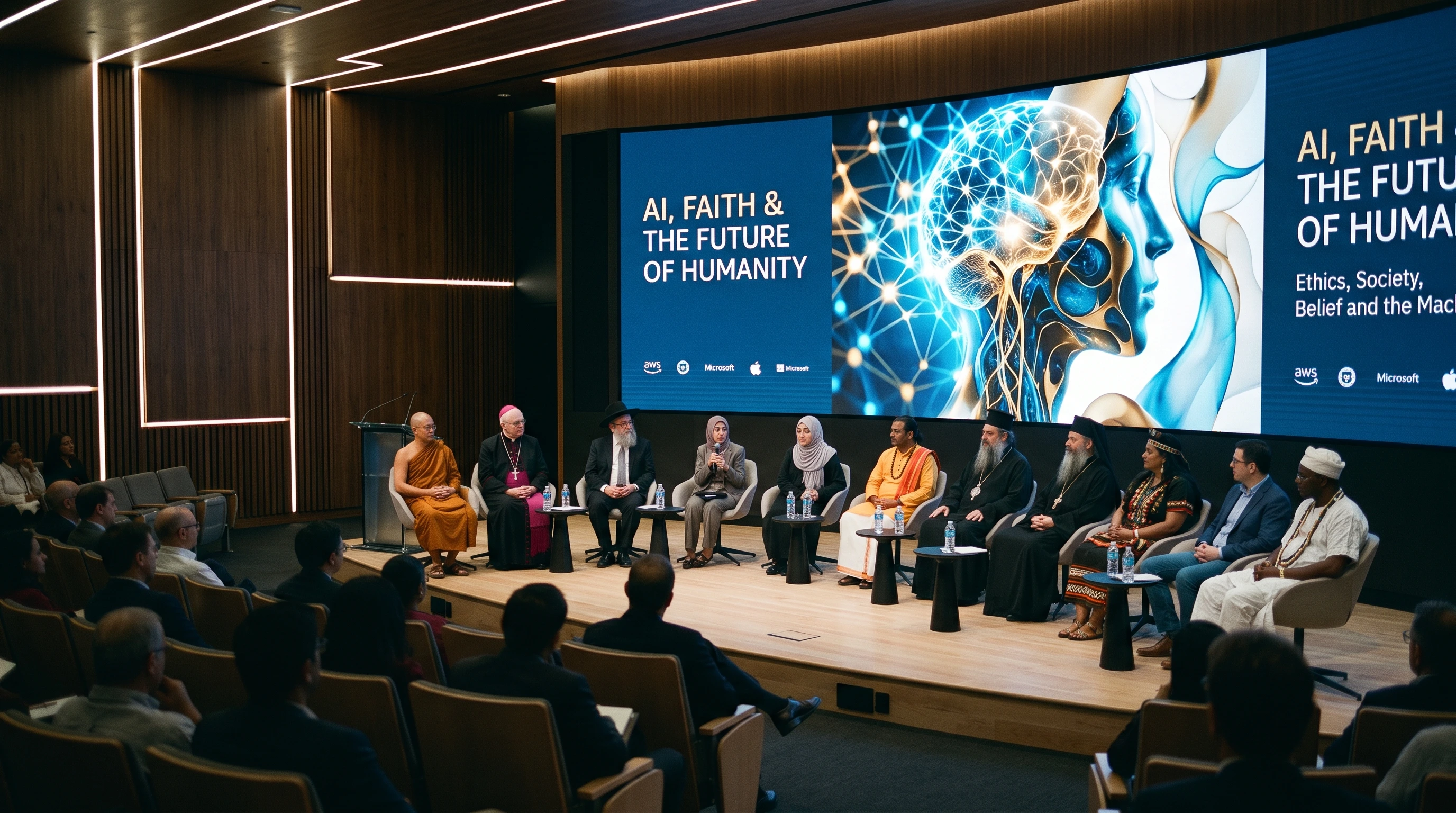
Anthropic, Google, Meta, and Microsoft are turning to religions and spiritual leaders to address the behavior of artificial intelligence systems. The initiative, revealed this Thursday (29), seeks to establish ethical benchmarks so chatbots can make responsible decisions, recognize moral dilemmas, and avoid harmful outputs.
The Search for Moral Frameworks
The outreach between tech companies and religious traditions reflects a growing challenge in AI development: how to embed diverse human beliefs and values into the rules governing language model behavior. Trained on vast internet datasets, chatbots absorb biases and conflicting viewpoints—prompting companies to seek external sources of moral authority to calibrate their responses.
Dialogue with religious leaders is not confined to a single tradition. The initiative convenes representatives from various faiths, who are invited to discuss how universal ethical principles can be translated into technical guidelines for these systems.
The Technical Challenge of Ethics
Translating religious and cultural values into computational rules is non-trivial. Language models operate on statistical patterns learned from data, and embedding ethical principles requires additional layers of training and fine-tuning. Through this dialogue, companies aim to develop mechanisms that allow chatbots to recognize sensitive contexts and respond in ways aligned with shared human values.
The core challenge lies in reconciling diverse beliefs within a single system serving a global user base. An output deemed appropriate in one culture may be considered offensive in another—forcing companies to navigate this complexity without imposing a singular worldview.
Industry Implications
The initiative by the four tech giants—Anthropic, Google, Meta, and Microsoft—signals a shift in how the industry approaches AI alignment. Rather than relying exclusively on internal ethics and safety teams, companies are seeking external legitimacy for their design choices.
The move also raises critical questions regarding AI governance. Who should define the values guiding chatbots? Tech companies, regulators, or religious and cultural communities? The answer will shape not only the underlying technology, but also public trust in AI systems that are increasingly embedded in everyday life.