Anthropic, Google, Meta and Microsoft Seek Religious Leaders to Shape Chatbot Behavior
Tech giants turn to religious traditions and spiritual leaders to define human values and prevent harmful responses in artificial intelligence systems
Pontos-Chave
- Anthropic, Google, Meta and Microsoft are among the companies seeking dialogue with religious leaders to discuss human values in AI
- The goal is to guide chatbots to recognize moral dilemmas and avoid harmful responses
- The approach raises the question of how to incorporate different beliefs and cultural values into systems' behavior rules
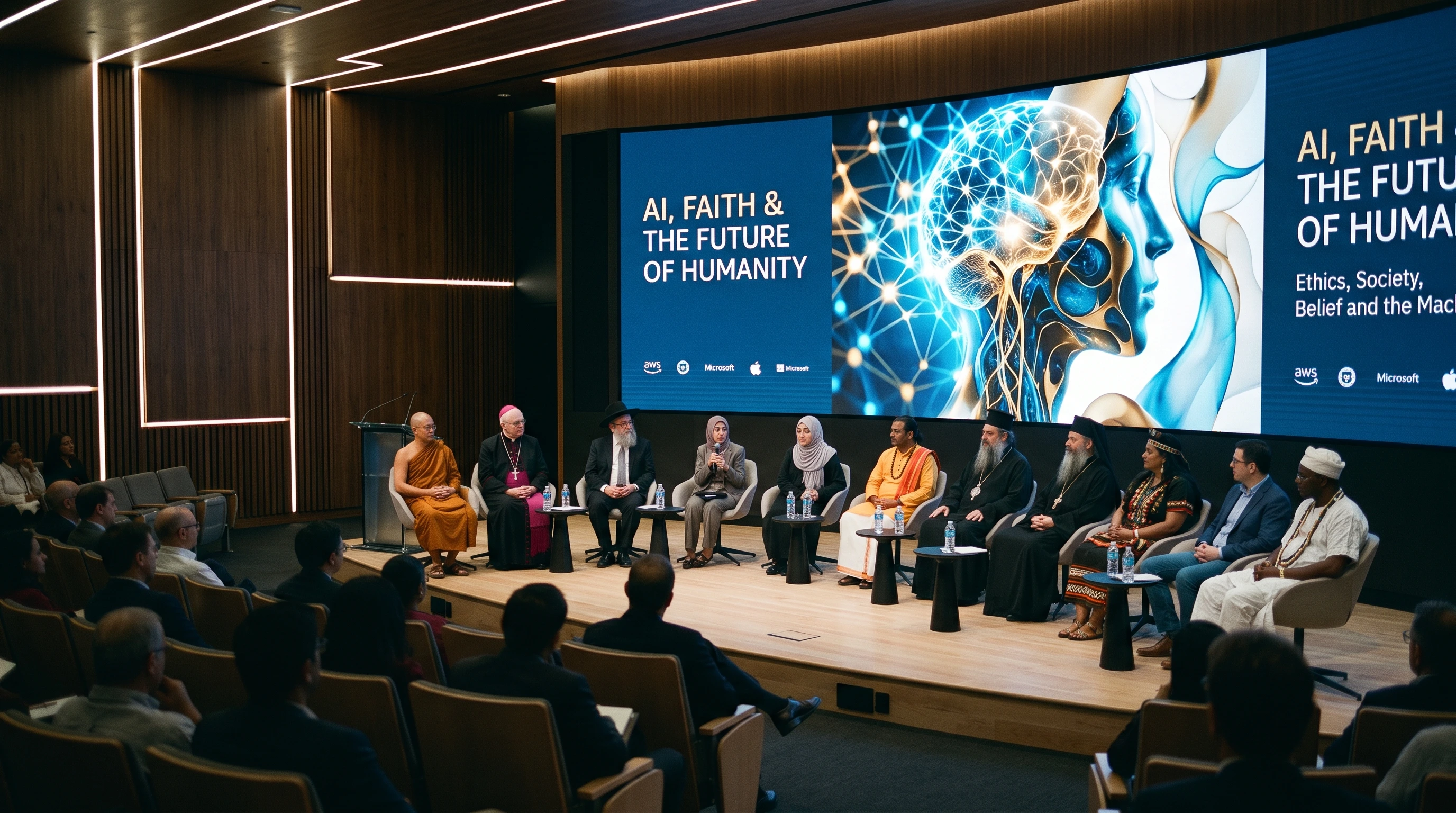
Anthropic, Google, Meta and Microsoft are turning to religions and spiritual leaders to discuss the behavior of artificial intelligence systems. The initiative, revealed this Thursday (29), seeks to establish ethical references so that chatbots make responsible decisions, recognize moral dilemmas and avoid harmful responses.
The Search for Moral References
The rapprochement between technology companies and religious traditions reflects a growing challenge in AI development: how to incorporate different beliefs and human values into the rules that govern the behavior of language models. Chatbots, trained on vast datasets from the internet, absorb diverse biases and perspectives — and companies are now seeking external sources of moral authority to calibrate their responses.
The dialogue with religious leaders is not limited to a single tradition. The initiative involves representatives of different faiths, who are invited to discuss how universal ethical principles can be translated into technical guidelines for the systems.
The Technical Challenge of Ethics
Translating religious and cultural values into computational rules is not trivial. Language models operate through statistical patterns learned from data, and incorporating ethical principles requires additional layers of training and fine-tuning. Through this dialogue, companies seek to develop mechanisms that allow chatbots to recognize sensitive contexts and respond in alignment with shared human values.
The central question is how to reconcile diverse beliefs in a single system that serves users globally. A response considered appropriate in one culture may be seen as inappropriate in another — and companies must navigate this complexity without imposing a single worldview.
Implications for the Industry
The initiative by the four giants — Anthropic, Google, Meta and Microsoft — signals a shift in how the industry approaches AI alignment. Instead of relying exclusively on internal ethics and safety teams, companies are seeking external legitimacy for their design choices.
The move also raises questions about AI governance. Who should define the values that guide chatbots? Companies, regulators, or religious and cultural communities? The answer to this question will shape not only the technology but also public trust in AI systems that are becoming increasingly present in everyday life.
Practical Impact
For engineering teams, turning to religious leaders means translating plural ethical principles into concrete layers of training and fine-tuning, since models operate through statistical patterns and require additional mechanisms to recognize sensitive contexts. The architectural challenge involves reconciling diverse beliefs in a single system that serves users globally, without imposing a single worldview.
On the operational level, the initiative by Anthropic, Google, Meta and Microsoft shifts part of the legitimacy of design decisions to external sources of moral authority, which reconfigures the governance of AI alignment. The question of who defines the values of chatbots — companies, regulators, or religious and cultural communities — now conditions public trust and the adoption of these systems.