French App Copeel Outperforms Official Tesla Data and Exposes Telemetry Gap
Available on the App Store since November 12, Copeel turns vehicle data into detailed history with European hosting and its own assistant
Pontos-Chave
- Copeel launched on the App Store on November 12, 2026, after more than a year of development by French developer Jordan Couturier
- The app converts raw Tesla telemetry into organized trip history with energy costs, consumption per route, charging sessions, estimated range, and battery degradation over time
- Data is hosted on European servers, a competitive advantage for the continent's market
- Includes Copeel Intelligence, an AI assistant with monthly usage limits that answers questions about user data and executes remote commands like locking doors or starting climate control
- Architecture is an API client that authenticates with the Tesla account, periodically pulls data, and stores it in its own European cloud
- Competes with existing tools like TeslaMate (self-hosted) and Tessie, but positions itself as a native iPhone app in French without requiring home infrastructure
- Key feature: range map visualization showing how far the vehicle can go with available charge on a single screen
- Structural risk: dependence on Tesla's API means any change in access policy directly affects operations
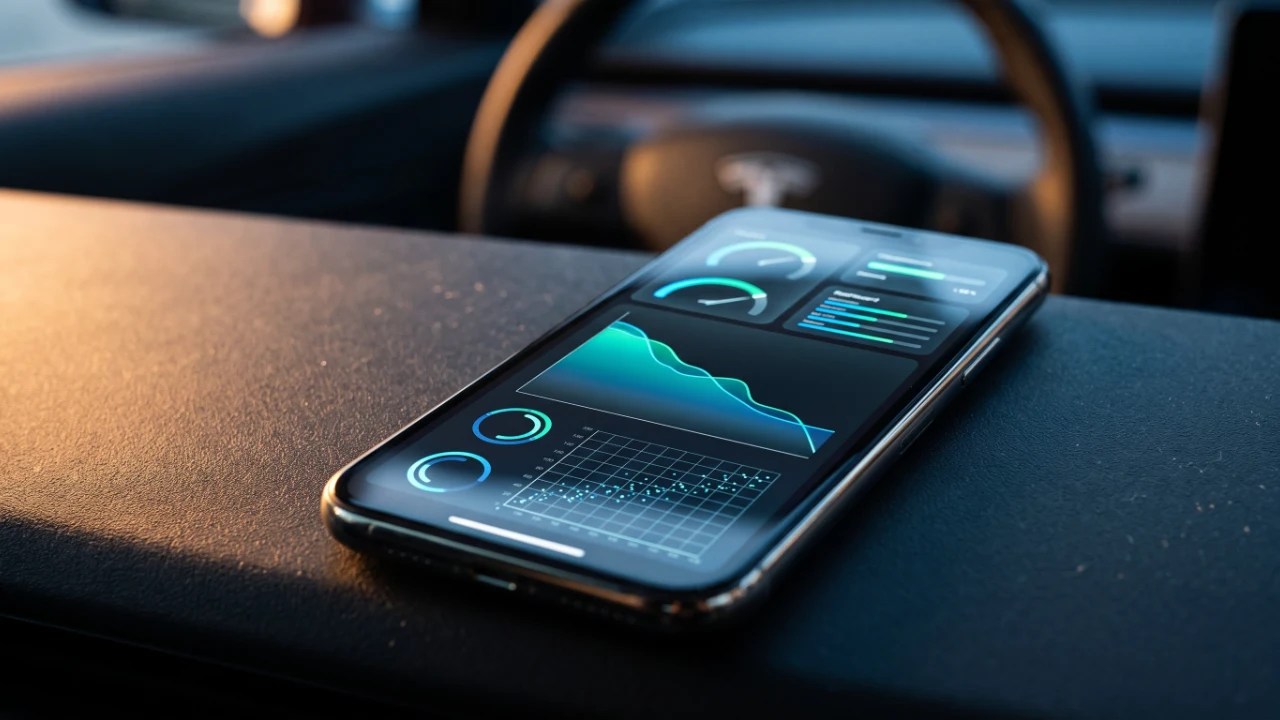
Copeel, an app developed by French developer Jordan Couturier, landed on the App Store on November 12, 2026, after more than a year of development. The proposition is straightforward: access the owner's Tesla account and convert the vehicle's raw telemetry stream into an organized history that the automaker's official app does not provide.
The tool records individual trips with energy costs, consumption per route, charging sessions, estimated range, and battery degradation evolution over months. Data is hosted on European servers, a competitive differentiator for the continent's market.
What the official app leaves on the table
Criticism of Tesla's native software is not new. The automaker's app offers limited history and does not exploit the full extent of data that the car itself generates. Tools like TeslaMate, which is self-hosted, and Tessie have occupied this space for years. Copeel bets on a different positioning: a native iPhone app, in French, without requiring home infrastructure.
Among the features highlighted by the developer is the "range map" visualization, which shows on a single screen how far the vehicle can go with available charge — useful for planning trips in areas with unknown charging infrastructure.
Assistant layer with monthly limits
As could not be missing in 2026, Copeel includes Copeel Intelligence, an assistant that answers questions about the user's own data and executes remote commands, such as locking doors or starting climate control. Usage is limited per month, although the developer does not publicly detail the exact cap.
The architecture is that of an API client: the app authenticates with the Tesla account, pulls data periodically, and stores it in its own European cloud. It is this persistent storage that enables long history and degradation calculations — something the official app, focused on real-time control, does not prioritize.
Practical Impact
From a technical standpoint, Copeel demonstrates that third-party software layers can extract analytical value from data that the manufacturer already collects but does not organize. Dependence on Tesla's API, however, is a structural risk: any change in access policy directly affects operations.
On the operational front, the app reinforces a market trend: owners of connected vehicles treat the car as a data platform and seek diagnostic and cost forecasting tools. For Tesla, the gap in detailed telemetry in the official app remains a point of friction with its own customer base.