Meta brings Cuttlefish to Apple Silicon Macs and unifies Android testing
Reality Labs revives QEMU support and rewrites the vhost-user paths to run the AOSP virtual device framework natively on macOS
Key Takeaways
- Cuttlefish boots the same system images as real hardware, offering higher fidelity than the lightweight Goldfish emulator
- Native Apple Silicon support required reviving QEMU and relaxing vhost-user build restrictions that had been Linux-only
- QEMU's HVF backend had its memory slot count expanded to support larger Cuttlefish configurations
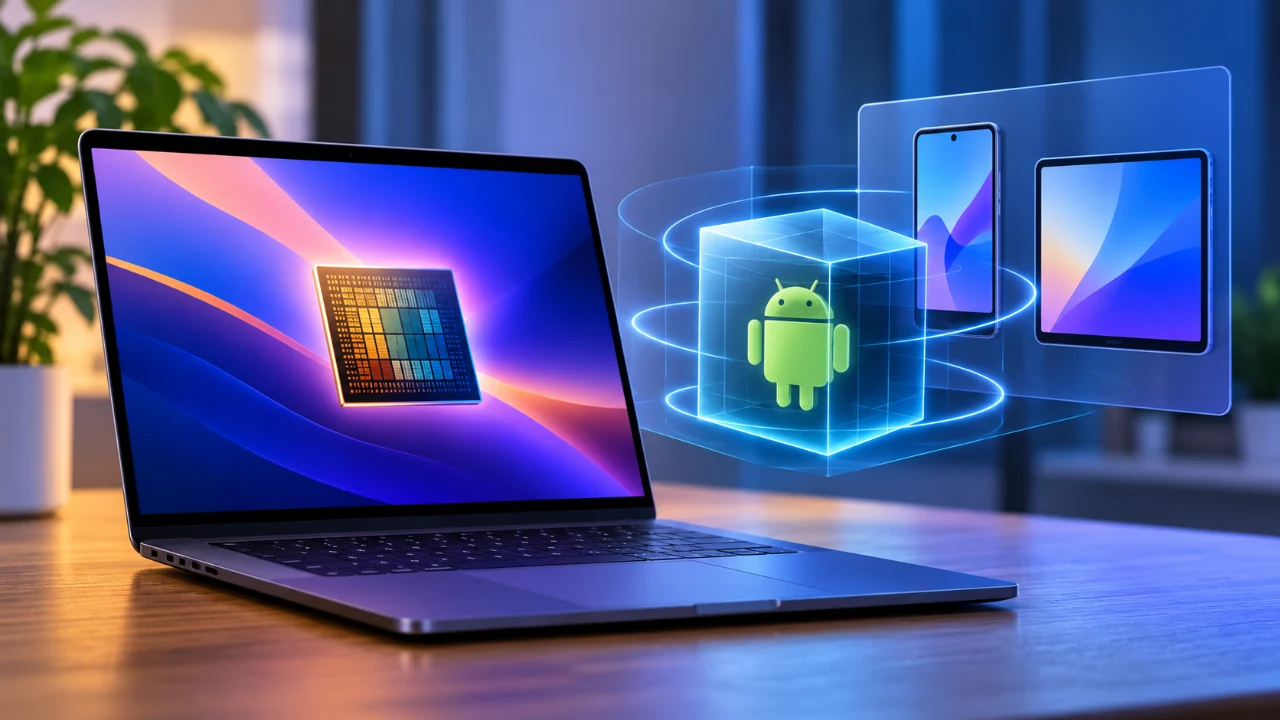
Meta has completed the port of Cuttlefish, the Android Open Source Project (AOSP) virtual device framework, to run natively on Macs equipped with Apple Silicon. The work, detailed by the Reality Labs engineering team, removes the long-standing Linux dependency and lets application and library developers validate software against a high-fidelity device model without leaving macOS.
Cuttlefish differs from Goldfish, the lightweight emulator traditionally used by app developers, by booting the same system images as physical hardware and running a realistic software stack on virtual hardware. That behavioral proximity reduces the chance of bugs escaping into late development stages — a recurring problem when relying on low-fidelity emulators, which also erode confidence in emulation and increase pressure on physical hardware, a scarce resource.
The architecture behind the port
Cuttlefish acts as an orchestration layer, while the component that actually runs the guest system is a virtual machine monitor (VMM). On Linux, the framework typically uses crosvm, but has also supported QEMU as an alternative — an integration that had gone dormant over time. To enable native Apple Silicon support, Meta's team reactivated QEMU.
Many Cuttlefish virtual devices use vhost-user backends, separate processes that provide virtio devices to QEMU over a socket. The architecture is clean, but large parts of it were written with a rigid Linux assumption. Three of those assumptions break on macOS: the vhost-user machinery is Linux-only and neither compiles nor runs; Apple's hypervisor imposes resource limits that QEMU did not expect; and the native display, build and signing paths simply did not exist.
QEMU, HVF and the bridge to Apple's hypervisor
The most structurally significant changes were in QEMU's vhost-user path. The frontends, the libvhost-user library and the contrib backends — such as vhost-user-blk — were all gated on Linux. The team relaxed those build restrictions so that vhost-user frontends and libraries compile on both macOS and Linux, allowing Cuttlefish's device backends to connect to QEMU on the Mac just as they do on Linux. Without that, the higher-fidelity device model that makes Cuttlefish worthwhile would not be available outside Linux.
On Apple Silicon, QEMU accelerates through HVF (Hypervisor.framework) instead of KVM. QEMU's HVF backend did not track enough memory regions for larger Cuttlefish configurations; the team increased the slot tracking count so those scenarios run correctly.
Native display and the end of fragmentation
For local application development, an interactive display is required so the developer can see and interact directly with the virtual device. The team moved to QEMU's native Cocoa display, sidestepping the WebRTC interface dependency and enabling direct interaction with the emulated environment.
The backdrop to the effort is operational. Maintaining two emulation platforms in parallel imposed a heavy burden: it drained compute resources, created confusion among developers and slowed the emulation team, since each tool required support for two distinct targets. AOSP itself mirrors that split — Goldfish serves app developers, while Cuttlefish serves Android platform developers. As long as that separation persisted, fragmentation kept exacting its toll.
Practical impact
From an architectural standpoint, the port shows that Cuttlefish's coupling to Linux was less a design requirement than a layer of undocumented assumptions in vhost-user and HVF memory tracking. Relaxing those build restrictions paves the way for porting the framework to other operating systems that use hypervisors other than KVM.
Operationally, consolidating onto a single high-fidelity emulation platform reduces the split of infrastructure and engineering capacity across two targets. For teams building Android software on Apple Silicon Macs — a common scenario at companies building products such as Reality Labs' AI glasses — that means tests closer to physical device behavior without depending on scarce hardware.