AI Agents Require Sandboxes and Policies to Prevent Credential Leaks
Companies must validate autonomous agents' access boundaries and monitor unauthorized requests to external services
Understanding the Case
- Two incidents: credential leak in Claude Code and traffic interception in Grok Build CLI
- Four Docker controls: network policy, filesystem policy, managed credentials, and MCP access
- GDPR, HIPAA, and India's DPDP (effective May 2027) impose breach notification duties
AI agents used for coding can access the home directory, use development credentials, and send requests to services that were never approved. The gap between the requested task and the access granted turns a routine coding session into a risk of data leakage or lost work.
One of the cases analyzed involves running Claude Code and an MCP server inside Docker Sandboxes, with outbound access blocked; the request to an unauthorized destination failed at the network boundary. Another case is the interception of Grok Build CLI traffic, which exposed credentials.
Four Controls to Contain Agents
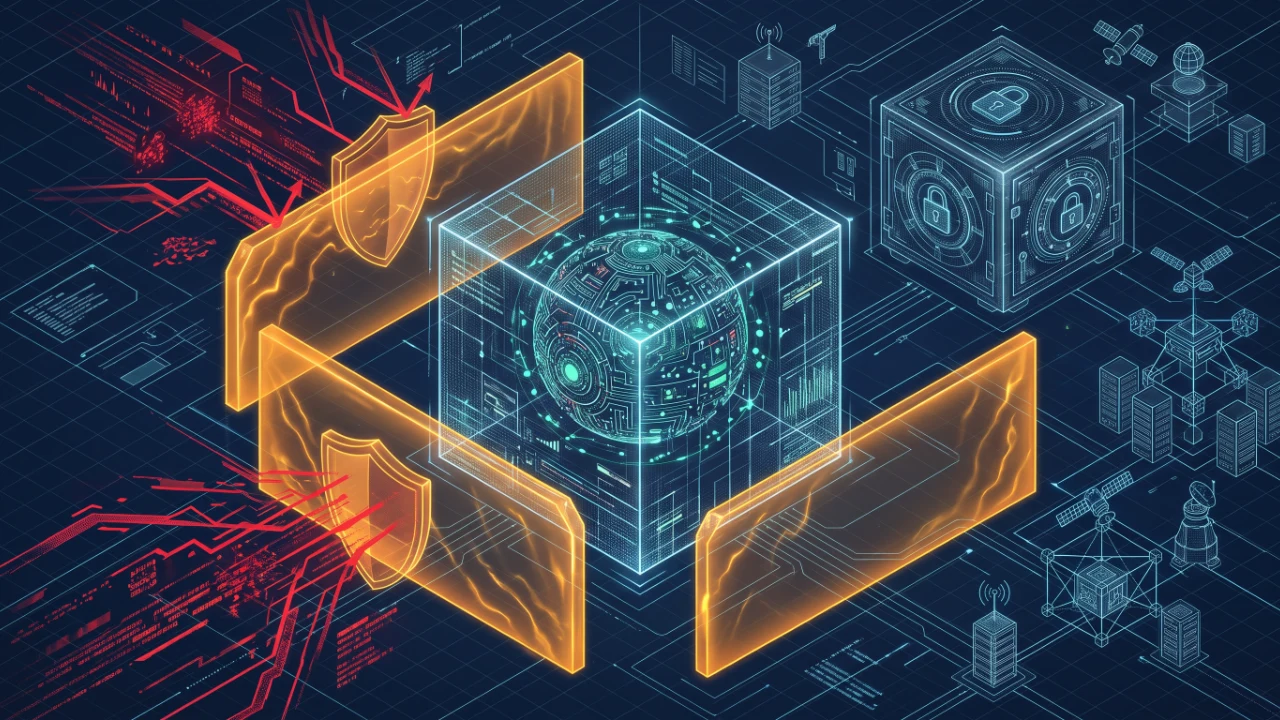
The sandbox limits what an agent can reach on a machine. Organizational governance adds shared rules, a managed way to run agents, and records of policy decisions. Four controls stand out: network policy, filesystem policy, managed credentials, and MCP access.
Network policy restricts destinations and allows requests, including telemetry, to be inspected. Filesystem policy defines which directories the agent can read or write. Managed credentials prevent SSH keys and cloud tokens from being exposed in the agent environment. MCP access control limits which MCP servers can be invoked.
A demo with a database administrator tests the network and filesystem controls. The goal is to see a real request fail at the network boundary, proving that the barrier works.
Compliance and Data Sovereignty
Personal data breaches can trigger notification duties under the GDPR, with applicable risk thresholds. HIPAA has separate requirements for covered entities and business associates. India has the DPDP, whose breach notification provisions are scheduled to take effect in May 2027. For SOC 2, the question is whether controls operate as described; it is not a breach notification law.
Data sovereignty adds another question: where do the data go, and who controls them? Before approving a model API endpoint, organizations must establish where prompts and outputs are processed and stored, who can access them, and which contracts and laws apply. The provider's nationality alone does not answer these questions. Network policy can restrict the destination, but it cannot prove how the provider handles data after receiving it.
Practical Impact
In practice, engineering teams need to treat guardrails as testable code: reproduce requests, verify failures at the network boundary, and keep records of policy decisions. A sandbox architecture with network and filesystem policies reduces the attack surface, but it requires continuous credential management and review of access to MCP servers.
Operationally, the adoption of autonomous agents increases the need for backups of unversioned work and for credential revocation plans. The cost of a leak includes investigating every system that accepts the exposed token, replacing keys, and possible regulatory notification.