US Hyperscale Data Centers Total 82 TWh, With 54% From Fossil Fuels
Harvard-led study maps 403 facilities via satellite and finds that gas and coal supplied 54% of the electricity consumed
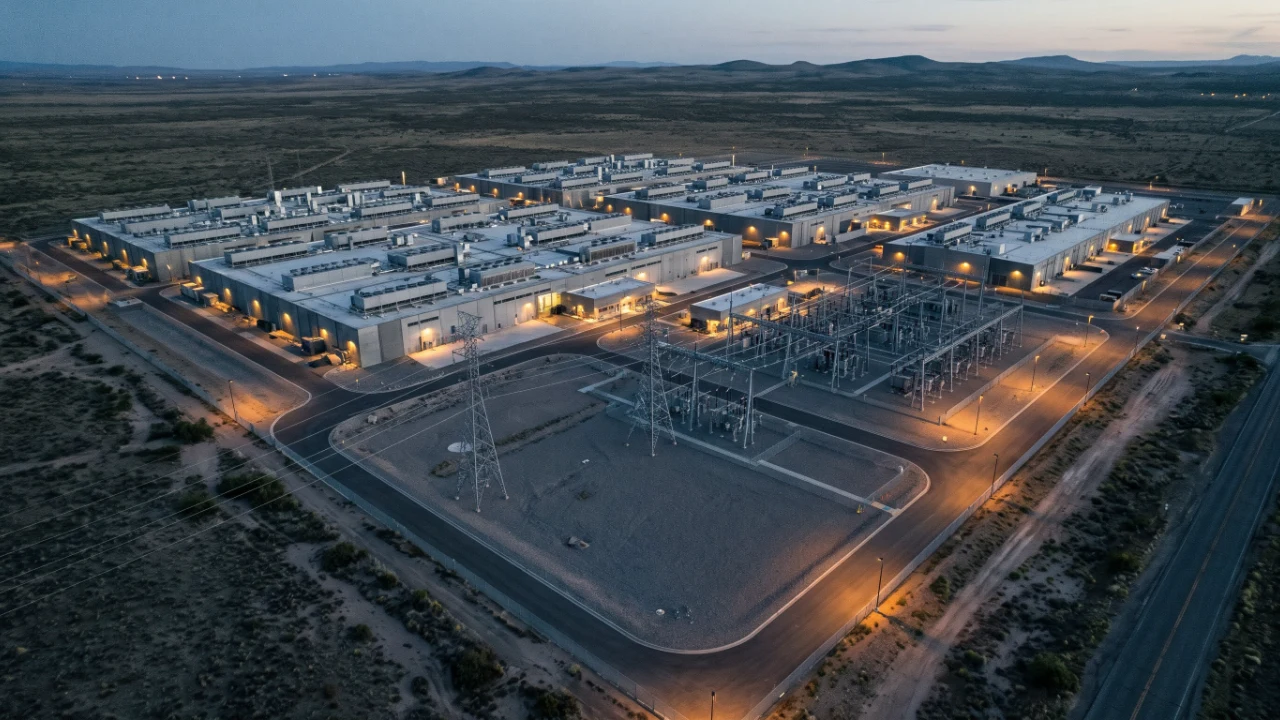
Study Fact Sheet
- 403 hyperscale data centers consumed 82 TWh in a single year in the United States
- Natural gas and coal supplied 54% of the electricity consumed by the mapped campuses
- Consumption exceeds that of entire countries, such as Austria, Israel, and Venezuela, according to MIT
A satellite imagery scan identified 403 hyperscale data centers operating in the United States and calculated the energy cost of that expansion: approximately 82 terawatt-hours (TWh) of electricity consumed in a single year.
The figure is higher than Michigan's total consumption, with the facilities exceeding 80% of the electricity used by the US state in the same period. The survey, led by the Harvard T.H. Chan School of Public Health, was published in the journal Nature Sustainability and has a preprint available on arXiv.
Satellite as a Meter
The methodology did not rely on companies' self-reporting. Gianluca Guidi's team — he is a postdoctoral researcher in Harvard's Department of Biostatistics — used satellite images to locate the hyperscale structures: warehouses occupying millions of square meters and built primarily to support generative AI workloads.
Based on each campus's installed electrical capacity, the researchers estimated energy consumption. They then cross-referenced these data with information from the US Environmental Protection Agency (EPA) to approximate the carbon pollution each data center would have produced if connected to the local grid between May 2024 and April 2025.
According to the authors, the carbon footprint for the period is comparable to Denmark's for an entire year.
The Weight of the 54% Fossil Share
Just over half of the electricity consumed by the facilities — 54% — came from natural gas and coal, which explains the emissions intensity even on a grid that, in several US regions, already incorporates renewables.
John Sterman, director of the MIT System Dynamics group and the MIT Sloan Sustainability Initiative, made the international comparison cited in the article: the 82 TWh exceed the individual consumption of entire countries, including Austria, Israel, and Venezuela. The associated emissions, in turn, also exceed the total of several nations.
Sterman did not participate in the research and said he used Claude as support in cross-referencing the paper's data with countries' consumption and emissions statistics.
"Not Inevitable"
For Guidi, the central finding is that AI's environmental impact is not a fixed property of the technology. "We often discuss AI's environmental footprint as if it were an immutable property of the technology, when in reality the same computing infrastructure can have radically different consequences depending on the power system that supports it," he told The Verge.
The researcher completes the reasoning with a decision-making argument: "I find this encouraging, because it means these impacts are not inevitable. We have choices about where we build and how we power this infrastructure."
Sterman follows the same line, but with emphasis on the irreversible nature of accumulated emissions. He assesses that public policymakers should condition the operation of these facilities on adding new clean energy capacity to the local power system.
Practical Impact
From an engineering standpoint, the study shifts the debate from a data center's total consumption to the electricity mix that powers it. Two facilities with the same installed capacity in megawatts can have very different carbon footprints depending on the region and the dispatch of fossil-fuel plants.
Operationally, the data puts pressure on the planning of new campuses: site selection and energy procurement now weigh as much as chip efficiency. The 54% fossil-origin metric indicates that isolated efficiency gains do not solve the emissions equation.